
Quick Overview: The best wedding drone shots for UK couples...
Read More
Share On Social Media
12 Best Wedding Drone Shots Ideas for UK Couples in 2027
The best wedding drone shots for UK couples in 2027 include the venue reveal, pull-away portrait, golden-hour orbit, top-down walk, coastal clifftop, arrival tracking, confetti line, aerial guest group photo, follow shot, through-the-trees reveal, blue-hour marquee shot, and seasonal scenery shot.
The right choice depends on your venue, wedding timeline, weather, and whether your pilot can legally and safely fly near people.
Drone footage can add a cinematic sense of scale to a UK wedding film, especially at castles, country houses, beaches, gardens, vineyards, and rural venues. However, not every shot is suitable for every wedding. This guide explains what each shot looks like, when to schedule it, and the practical considerations UK couples should discuss with their drone pilot before the big day.
Wedding Drone Shots at a Glance- Comparison Table
|
Shot
|
Best Time of Day
|
Guests in Frame
|
|---|---|---|
|
Venue reveal
|
Morning, before guests arrive
|
No
|
|
Pull-away portrait
|
Any time with soft light
|
No
|
1. The Venue Reveal: Best for Manor Houses and Castles
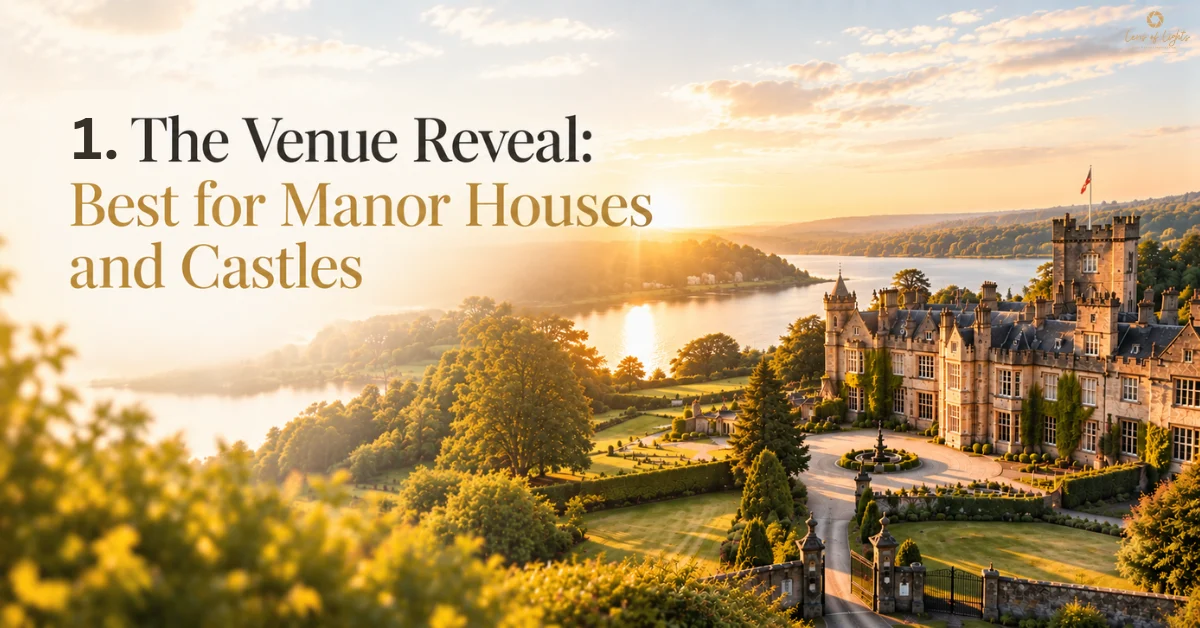
The venue reveal is a slow, forward-moving, or rising shot that shows your entire venue and its setting in a single continuous shot. It usually opens the wedding film. The pilot flies it before guests arrive, so nobody is in frame, and the distance rules stay simple.
Country houses, castles, barns, and lakeside venues suit this shot best. It depends on the grounds and scenery; a ground camera cannot fit everything into one frame. Ask for soft morning light if your ceremony starts at noon or later.
2. The Pull-Away Portrait: Best for a Romantic Opening or Ending
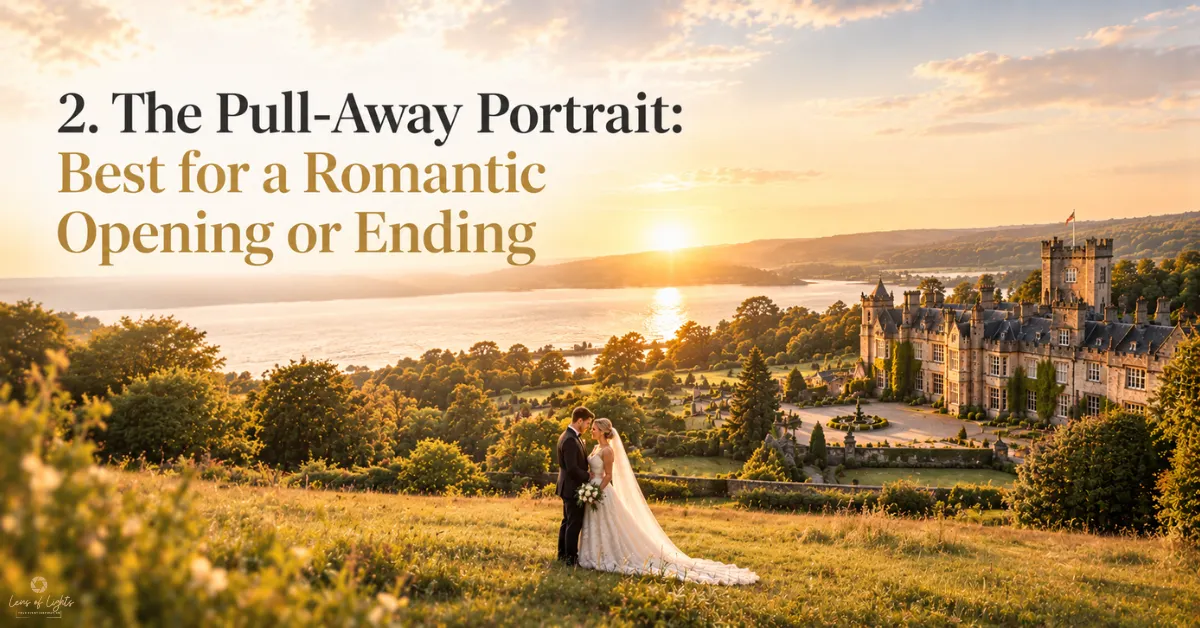
The pull-away portrait starts tight on the two of you, then lifts up and back until the venue and its surroundings fill the frame. It moves from personal to wide in a single move, which is why it works as an opening or closing shot.
Stand still on an open lawn, field, or beach while the drone retreats. Turning to face each other or walking slowly adds movement without any acting. Do this portrait when only you and the crew are present, before or after the guest-heavy parts of the day.
3. The Golden Hour Orbit: Best for Warm, Low-Light Couple Portraits
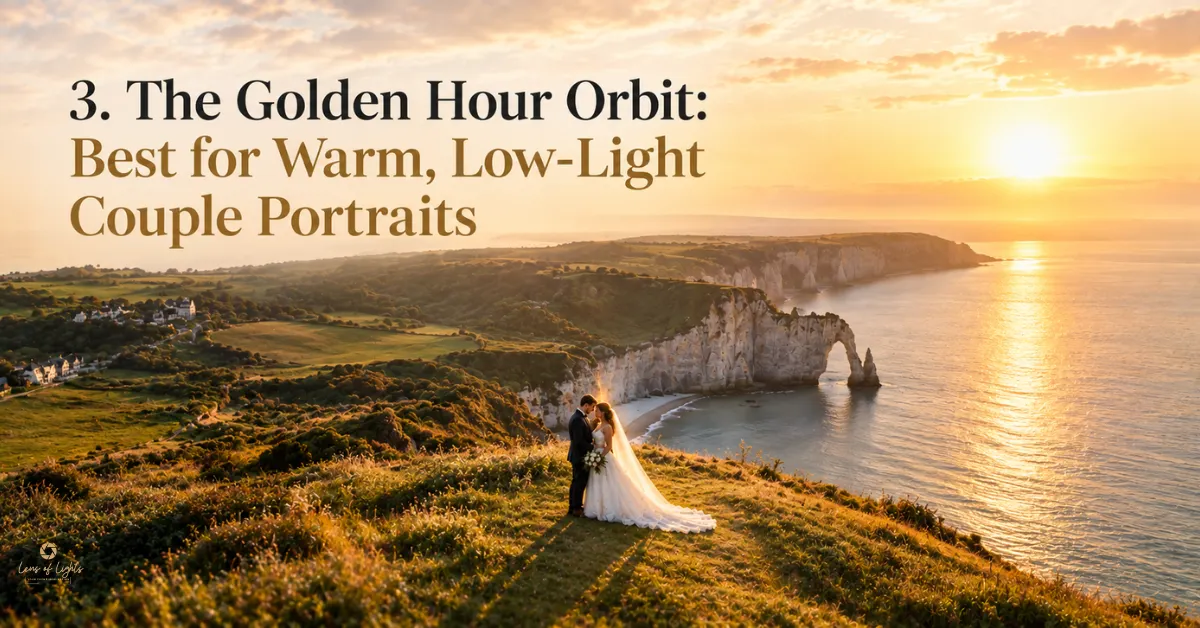
The golden hour orbit is a circular drone flight around the two of you during the hour before sunset, when the light is low and warm. It gives you a portrait-style aerial shot with long shadows and glowing edges.
Timing decides everything in the UK. Sunset falls in the mid-afternoon in December and after 9 pm in June, so your videographer needs to build the shot into the timeline for your month. Allow a short slot, then return to your guests.
4. The Top-Down Walk: Best for Gardens, Beaches, and Formal Grounds
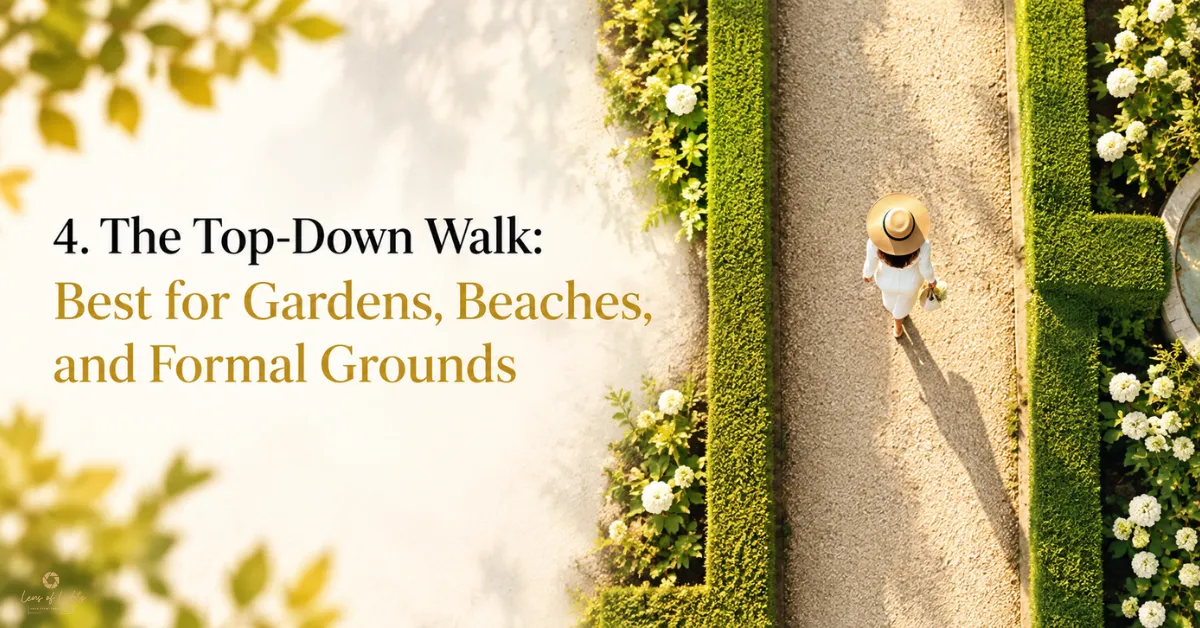
A top-down walk points the camera straight down while you walk along a path, shoreline, or hedgerow. The pattern beneath you becomes the picture, and you become a small detail inside it.
Formal gardens with clipped hedges, gravel drives, and wet sand with tide lines all work well. Pick a route with clear lines and contrast, and wear colours that stand out from the ground. This shot needs a wide-open area with no one else nearby.
5. The Coastal Clifftop Shot: Best for Cornwall, Devon, and Northumberland
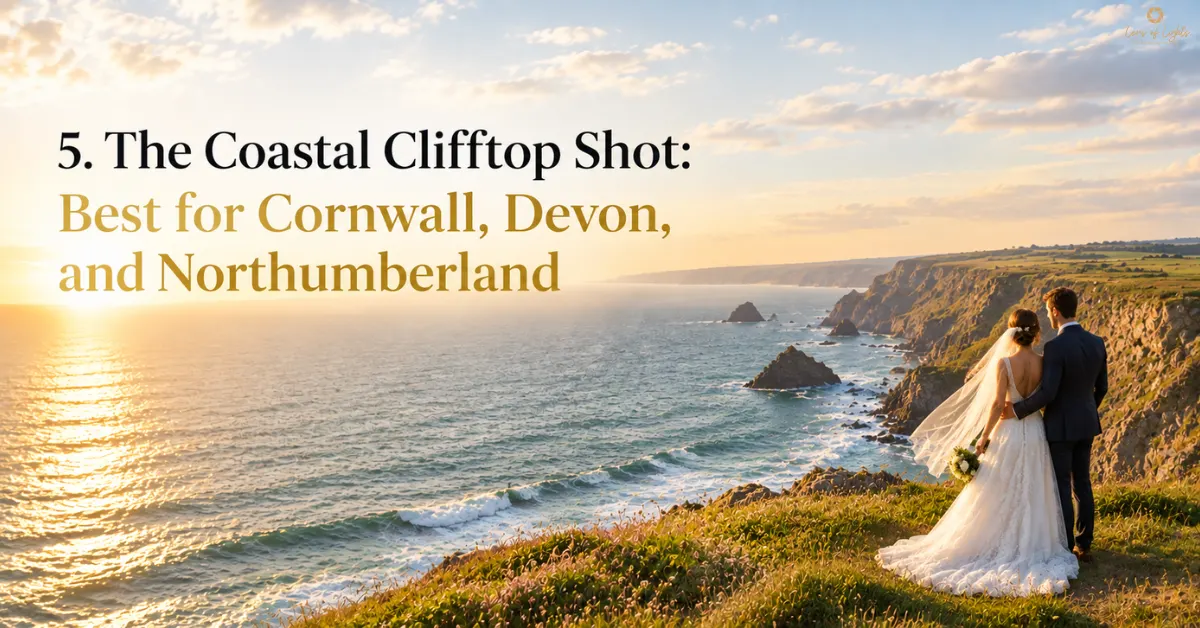
The clifftop shot places you at the edge of the coast with the sea, cliffs, and horizon filling the frame. The UK coast offers plenty of settings for it, including Cornwall, Devon, the Jurassic Coast, and the Northumberland shoreline.
Two practical limits apply. Coastal wind is stronger and more likely to ground the drone, and someone owns the clifftop or beach where the pilot takes off. The CAA says pilots must make sure the landowner allows take-off and landing (HireDronePilot, 2026), so ask early.
6. The Arrival Tracking Shot: Best for Venues with Long Drives
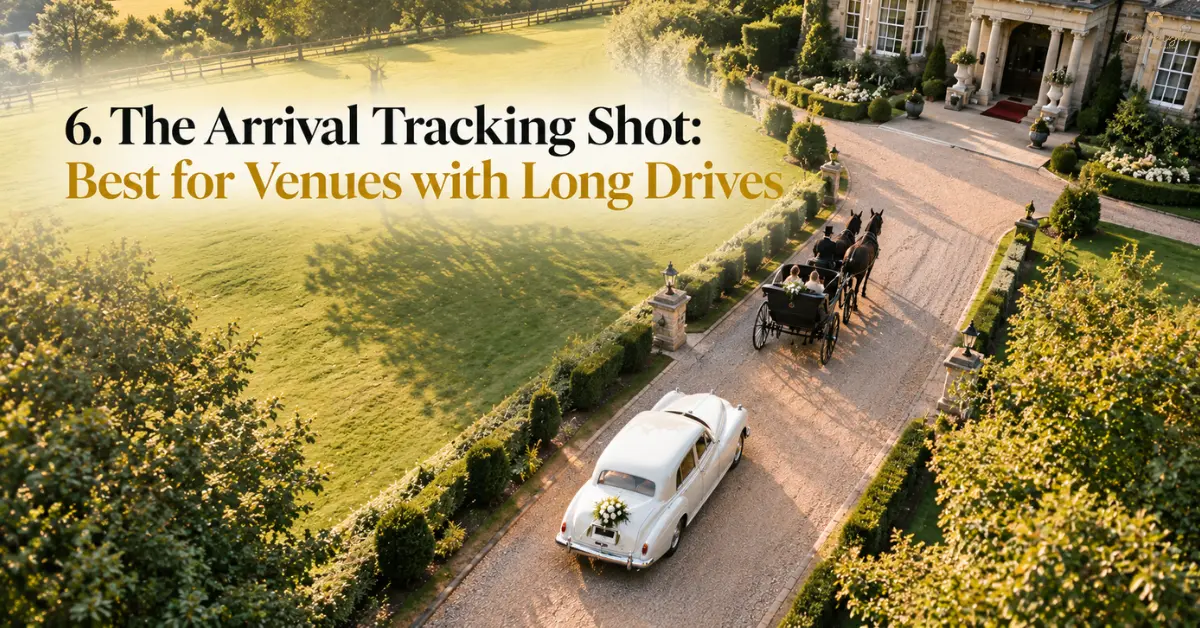
An arrival tracking shot follows a car, horse-drawn carriage, or vintage vehicle along a private drive toward the venue. The drone flies alongside or slightly above at a steady speed, ending at the venue frontage.
It suits venues with a long approach and couples who arrange special transport. Keep it to a private drive. Your pilot will advise on whether a public lane is possible, as roads and nearby buildings impose additional restrictions.
7. The Confetti Line from a Distance: Best for Large Open Lawns
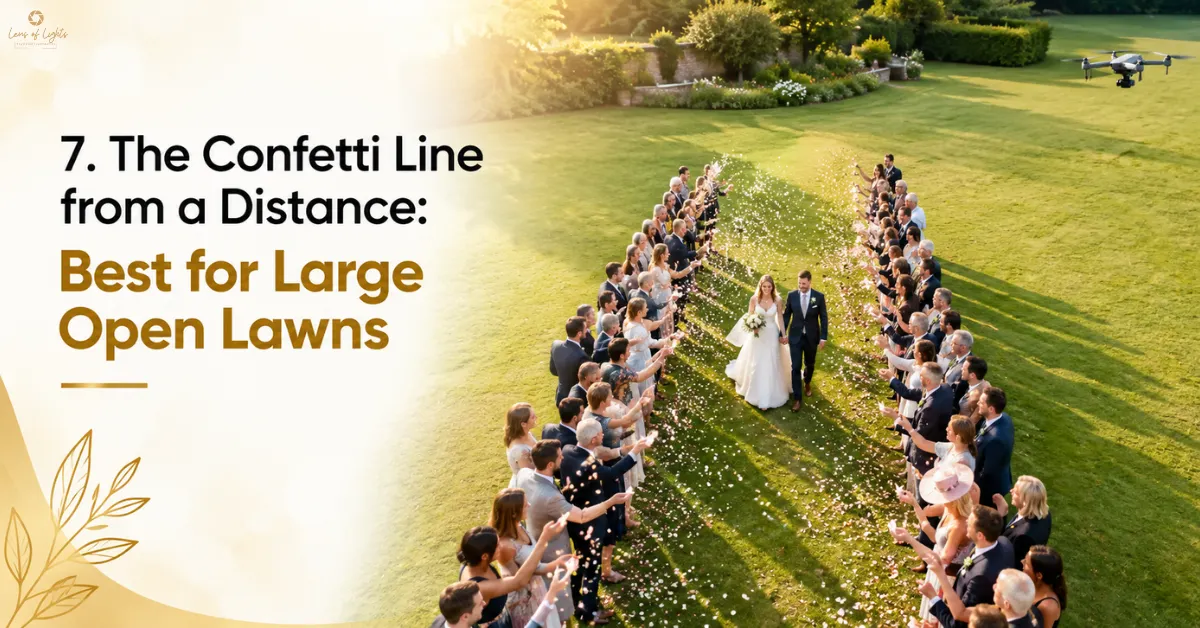
The confetti line shot shows guests forming two rows as you walk through, filmed from the side at a high enough angle to capture the whole scene. The pilot stays back and shoots wide instead of flying over anyone.
That distance matters because UK rules say a drone must never intentionally fly over people. Even with an A2 Certificate of Competency, a pilot keeps at least 30 meters from uninvolved people, or 5 meters in low-speed mode (T3, 2026). Only venues with an open lawn or terrace can offer this angle.
8. The Aerial Guest Group Photo: Best for Larger Weddings
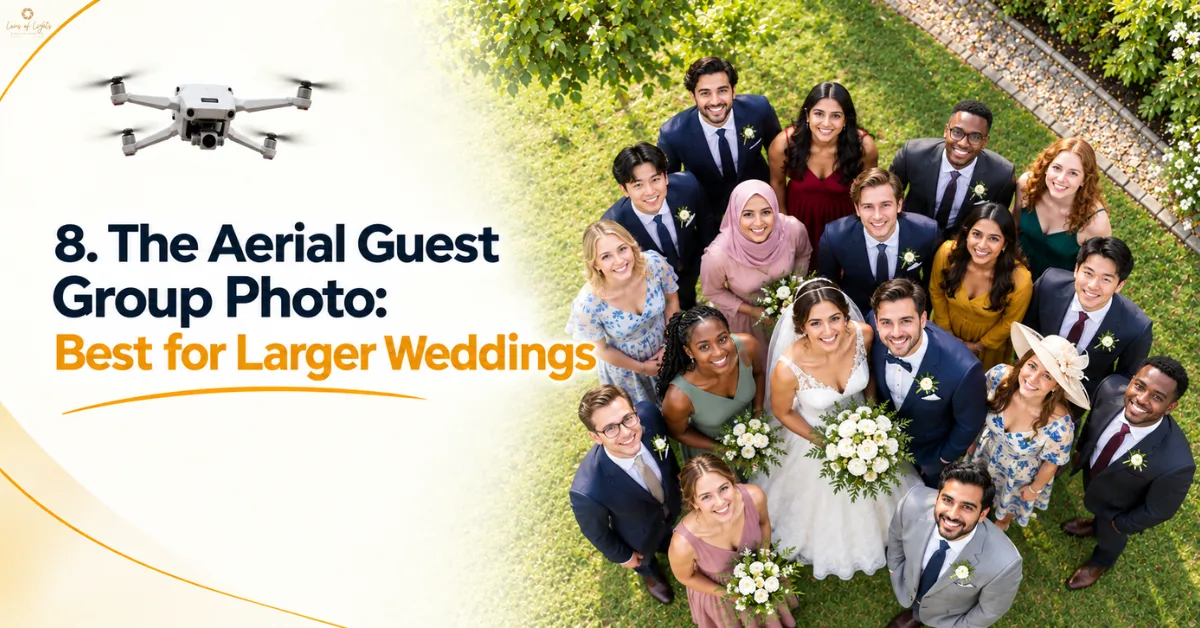
The aerial guest group photo shows every guest gathered on a lawn or terrace, shot from above or at a high angle. It is a good fit for weddings where a ground photographer cannot fit everyone into one frame.
Because guests are close to the drone, your pilot needs qualifications for flying near people, such as the A2 Certificate of Competency (A2 CofC) or a CAA Operational Authorization (Photo Video London, 2026). Ask which one they hold before you promise this shot to your guests. Keep a standard ground-level group photo as a backup in case of wind.
9. The Follow Shot: Best for Vineyards, Orchards, and Woodland Paths
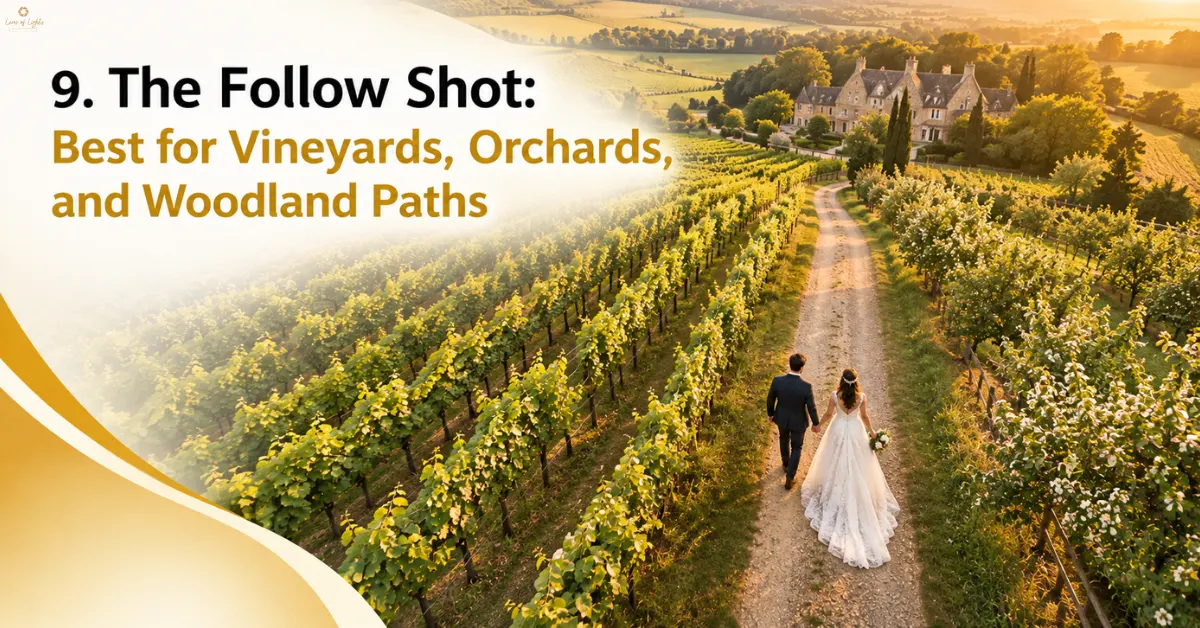
A follow shot has the drone trailing behind and slightly above as you walk away from the camera. It gives a sense of journey, and the scenery does the work.
Kent vineyards and orchards, Cotswold fields, and long garden paths all suit it. Walk at a relaxed pace and hold hands, because a steady walk is easier for the pilot to track and frame.
10. The Through-the-Trees Reveal: Best for Woodland and Garden Venues
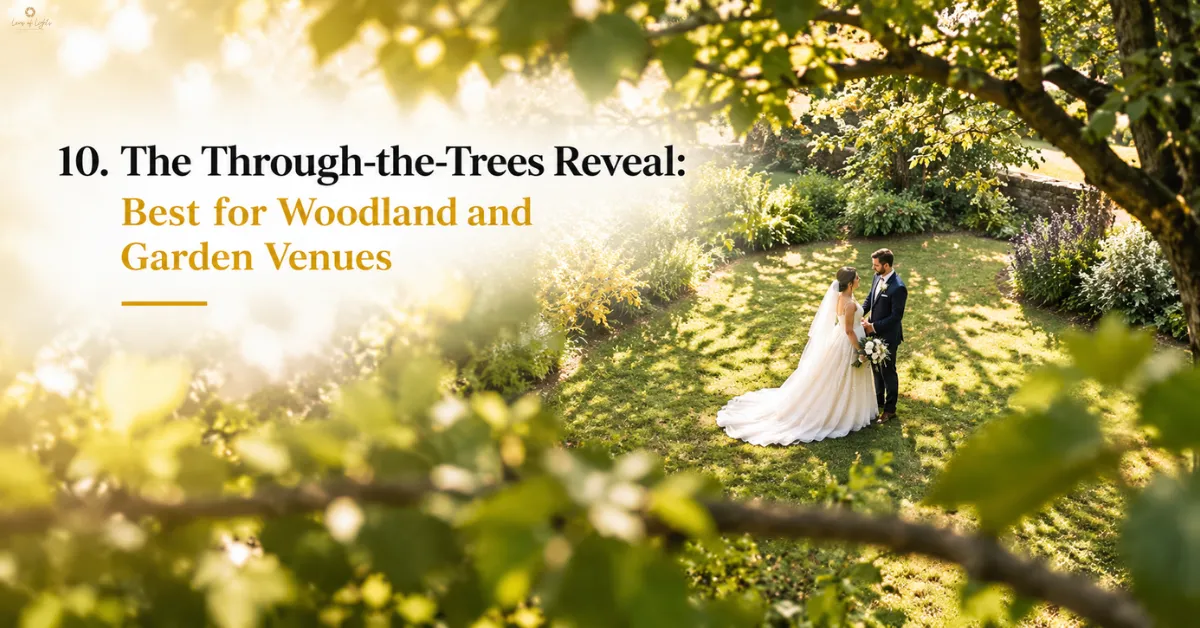
The through-the-trees reveal starts with the drone low, behind branches or a hedge, and then rises to show you standing in a clearing. It is a harder shot than most on this list.
Branches are a collision risk, so ask your pilot to visit the site or scout it on the day before flying. Pilots who have flown a venue before deliver this shot more reliably than those seeing it for the first time.
11. The Blue Hour Marquee Shot: Best for Marquee, Tipi, and Barn Weddings
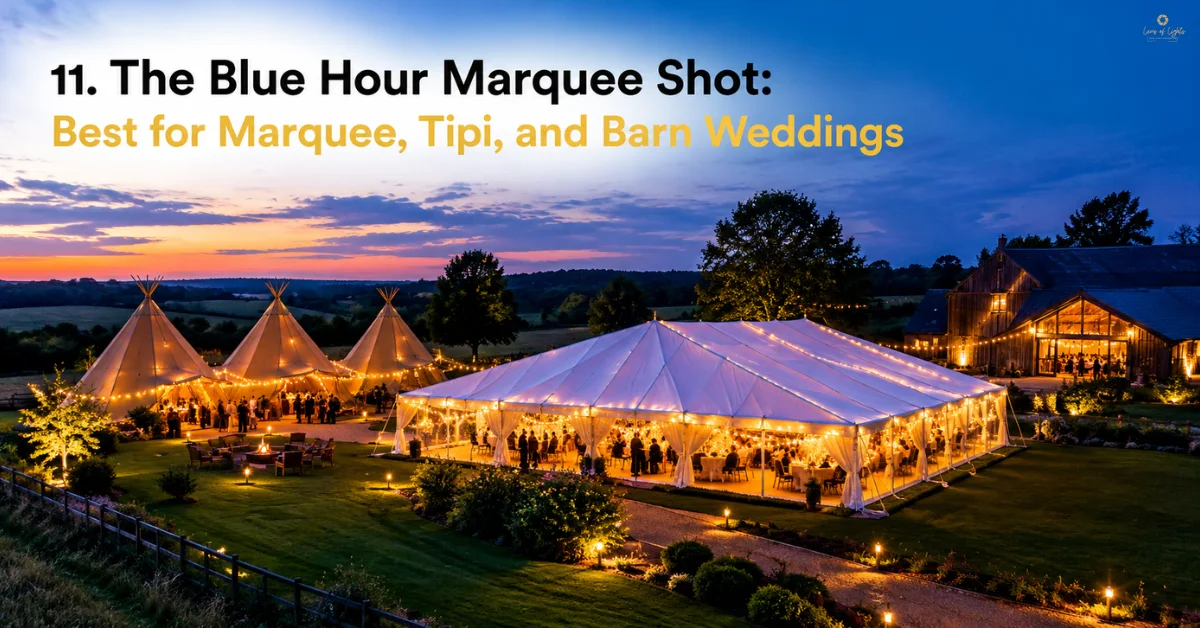
The blue hour shot shows your lit marquee, tipi, or barn glowing against a deep blue sky just after sunset. It is a wide shot of the whole site with the lights on and guests inside.
It needs a drone with a good low-light camera, and the window is short. Night flying carries extra rules, so ask your pilot what they are approved for and what their fallback is if the light fades early.
12. The Seasonal Scenery Shot: Best for Autumn, Winter, and Spring Weddings
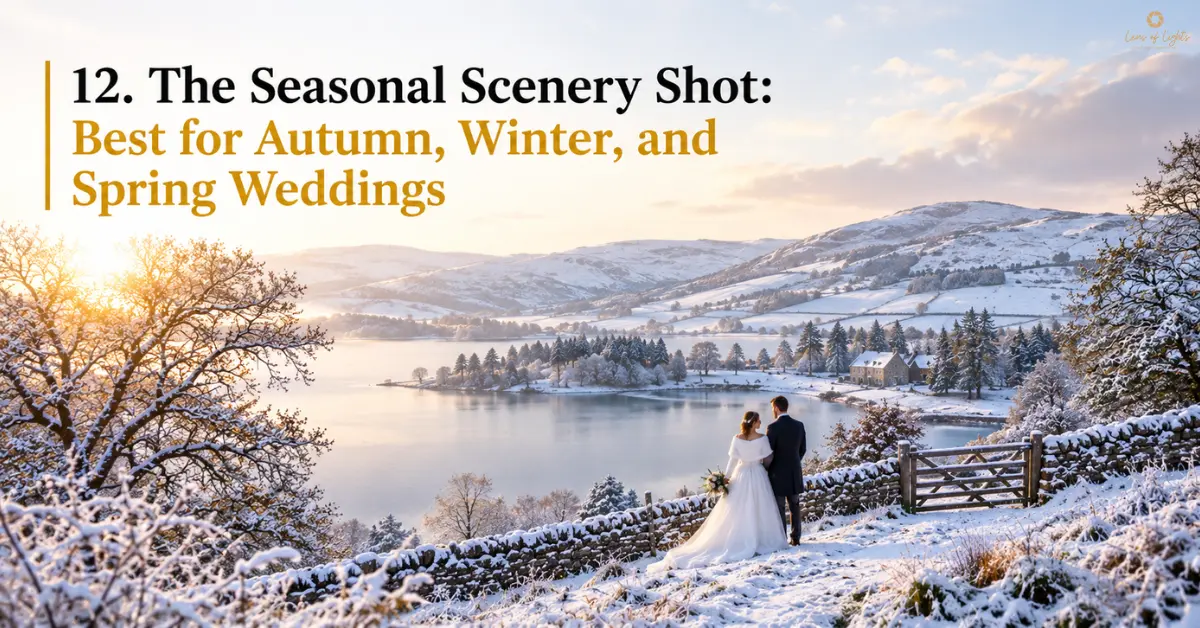
The seasonal scenery shot uses UK weather and color as the subject, such as autumn woodland, frost on fields, mist over a lake, or spring blossom. You appear small in the frame, and the season is the story.
Cold weather shortens drone battery life, and winter daylight is limited. Tell your pilot your wedding month early so they can plan the flight time and battery supply. Winter couples should schedule this shot for the early afternoon.
Final Verdict: Which Wedding Drone Shots to Book First
Book the venue reveal and the golden hour orbit first. Both work with only the two of you in frame, giving your film an opening shot and a portrait that ground cameras cannot match. Add a coastal, follow, or seasonal shot if your venue and month suit it.
Choose a pilot with a valid Flyer ID, Operator ID, and insurance, get your venue’s permission in writing, and keep a ground-level backup for wind. If you want photo, film, and drone coverage from one team, see the Lens of Lights wedding packages or read more planning advice on the Lens of Lights blog.
Frequently Asked Questions
What are the best wedding drone shots for UK couples?
The best wedding drone shots are the venue reveal, the pull-away portrait, the golden hour orbit, and the top-down walk. Each one works with only the two of you in frame, which keeps the flight simple. Add a coastal or seasonal shot if your venue has water, cliffs, or strong autumn or winter colour.
Are drones allowed at UK wedding venues?
Drones are allowed at UK wedding venues only with the venue’s permission. A venue may refuse takeoffs and landings on its grounds, and the pilot must hold valid Flyer and Operator IDs. Ask your venue coordinator in writing before you book a drone pilot.
Can a drone fly over wedding guests in the UK?
No, a drone must never intentionally fly over people in the UK Open Category. A pilot with an A2 CofC can fly 30 meters from uninvolved people, or 5 meters in low-speed mode. Shots that show guests are taken from a distance or by pilots with extra permissions.
How much does wedding drone footage cost in the UK?
Pubs, restaurants, and private dining rooms can sometimes offer lower-cost options because they may use minimum-spend or per-person arrangements rather than full-day wedding packages.
What happens if it is windy or raining on my wedding day?
The pilot may cancel or shorten the drone flight if wind or rain makes it unsafe. Drone shots depend on weather, so treat them as a bonus (Bookt, 2026). Agree on a backup time and ask what your supplier will do if no safe window appears.
What time of day is best for wedding drone shots?
The hour before sunset is best for portrait shots, because the light is low and warm. Morning is best for the venue reveal, since guests are not there yet. Sunset falls in the mid-afternoon in December and after 9 pm in June, so the timeline changes with your wedding month.
Do I need a drone at my wedding?
You do not need one, but it adds a wide view that ground cameras cannot match. It is worth booking if your venue has grounds, water, or scenery. It is less useful in an indoor city venue or a site near an airport.
Related Articles:
9 Affordable Micro Wedding Venues in London
Quick Overview: The best affordable micro wedding venues in London...
Read More
Do You Need a Wedding Content Creator Alongside Your Photographer?
Quick Overview: Most UK couples do not automatically need a...
Read More
5 Best Summer Wedding Venues in London for Stunning Photography
Quick Overview: Kew Gardens is the best overall pick for...
Read More