
Quick Overview: A wedding videographer in London typically costs £1,800-£4,500,...
Read More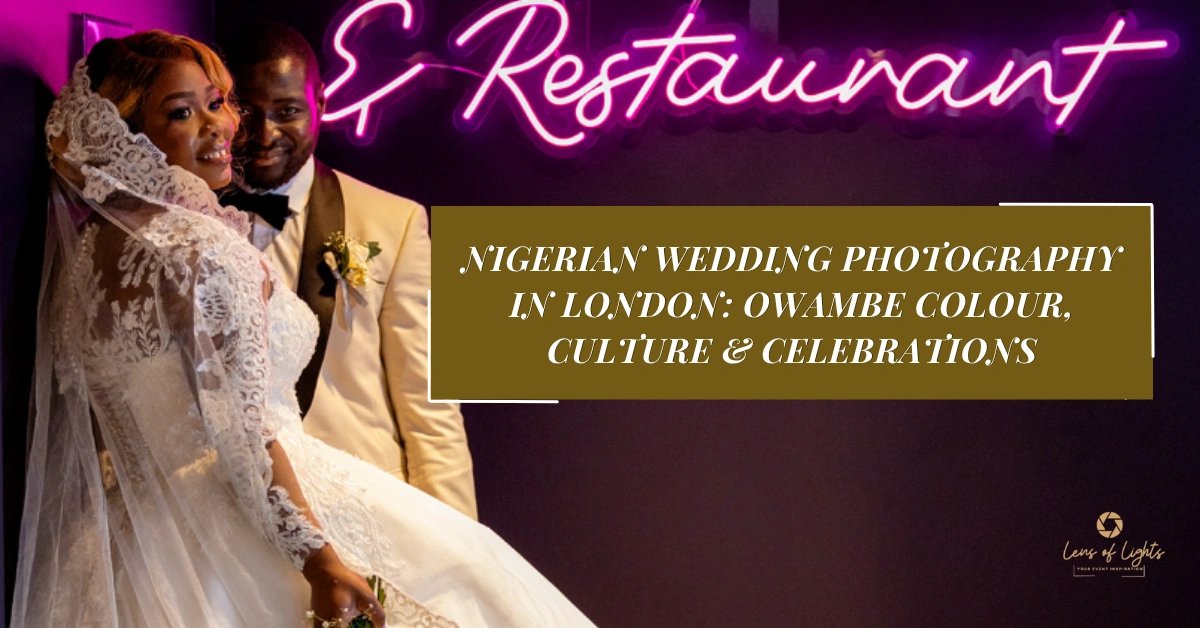
Share On Social Media
Nigerian wedding photography in London: Owambe colour, culture & celebrations
Photographing a Nigerian wedding in London involves more than standard wedding coverage-it requires cultural awareness, technical skill, and the ability to capture fast-moving, high-energy moments.
With hundreds of guests, coordinated aso ebi outfits, and traditions like the wine-carrying ritual or money spraying, these weddings demand an experienced specialist to ensure nothing important is missed.
This guide covers everything: what happens at a London Nigerian wedding, why photographing it is different, and how to find the right person for the job.
What Is an Owambe? The Heart of Every Nigerian Wedding
An Owambe is a large Nigerian celebration, usually a wedding reception, known for music, dancing, money spraying, and coordinated aso ebi outfits. It is the most energetic and visually rich part of a Nigerian wedding.
The word originates from Yoruba culture but is now widely used across Nigerian communities. In London, Owambe weddings bring together hundreds of guests and recreate the atmosphere of Lagos celebrations.
In London, the Owambe is where everything happens at once:
- The couple’s grand entrance is set to an Afrobeats track
- The money-spraying tradition
- Dancefloor battles between aso ebi groups
- The Alaga is working the crowd with call-and-response songs
- Rounds of food are coming out of the kitchen all evening
London Nigerian weddings are often just as grand as weddings in Lagos. The venue might be a banqueting hall in Tottenham or an estate in Hertfordshire. But the energy inside is pure Lagos either way.
The Three Major Nigerian Wedding Traditions – What Photographers Must Know
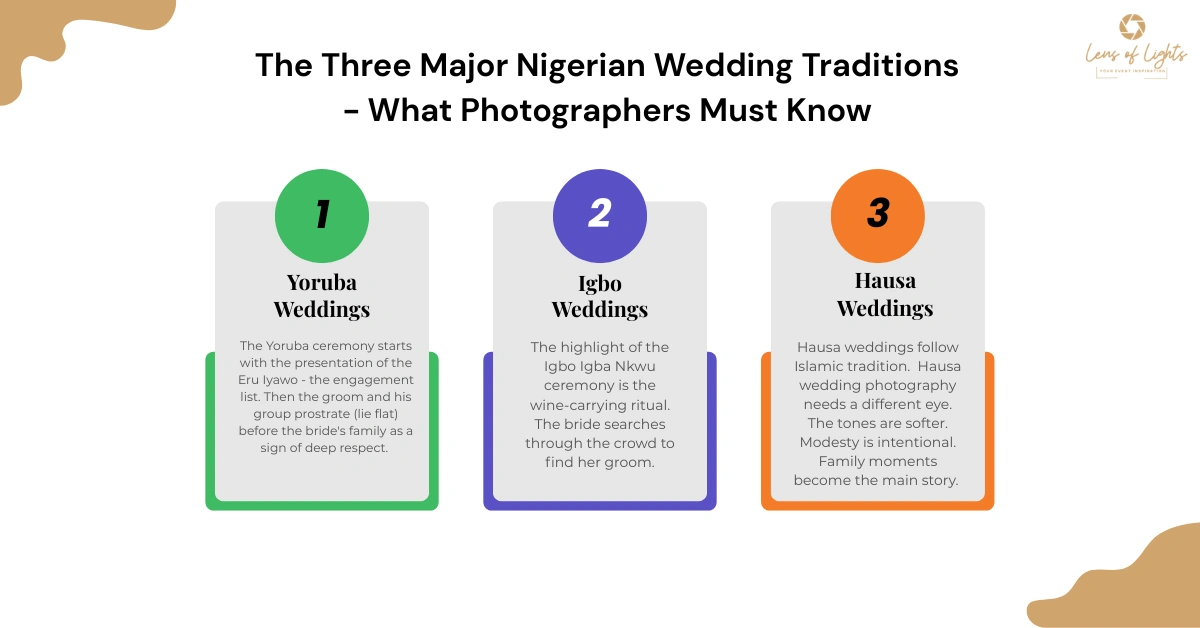
Nigeria has over 250 ethnic groups and more than 500 languages. Knowing which tradition a couple follows before you pick up a camera is not optional. It determines the ceremony order, attire, rituals, and shots you simply cannot miss.
Yoruba Weddings
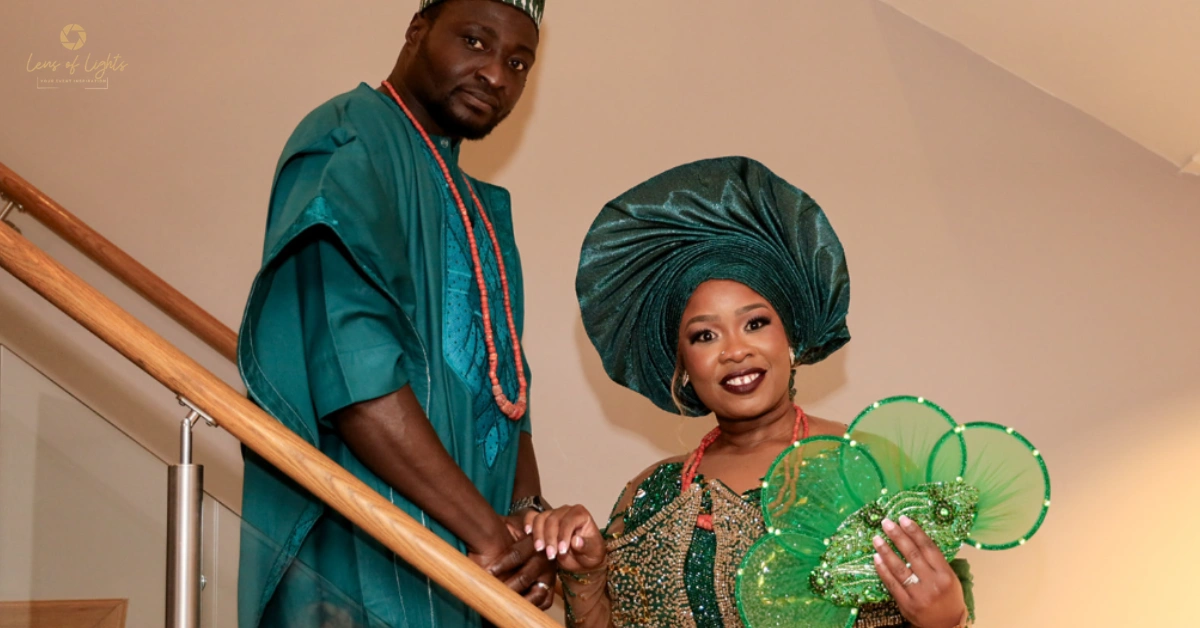
The Yoruba ceremony starts with the presentation of the Eru Iyawo – the engagement list. Then the groom and his group prostrate (lie flat) before the bride’s family as a sign of deep respect. The Alaga, a master of ceremonies, guides everything through songs and prayers.
Key attire to know:
- Gele – a hand-tied headwrap made from stiff fabric, shaped into dramatic crowns or elegant swoops. Gele-tiers are booked just for this job. Their work deserves close documentation.
- Aso-Oke – a handwoven fabric, usually in teal, burgundy, gold, or deep purple, used for the bride’s and groom’s outfits
For a photographer, the Alaga ceremony moves fast, and the crowd responds on cue. You must anticipate the moment – not wait for it.
Igbo Weddings
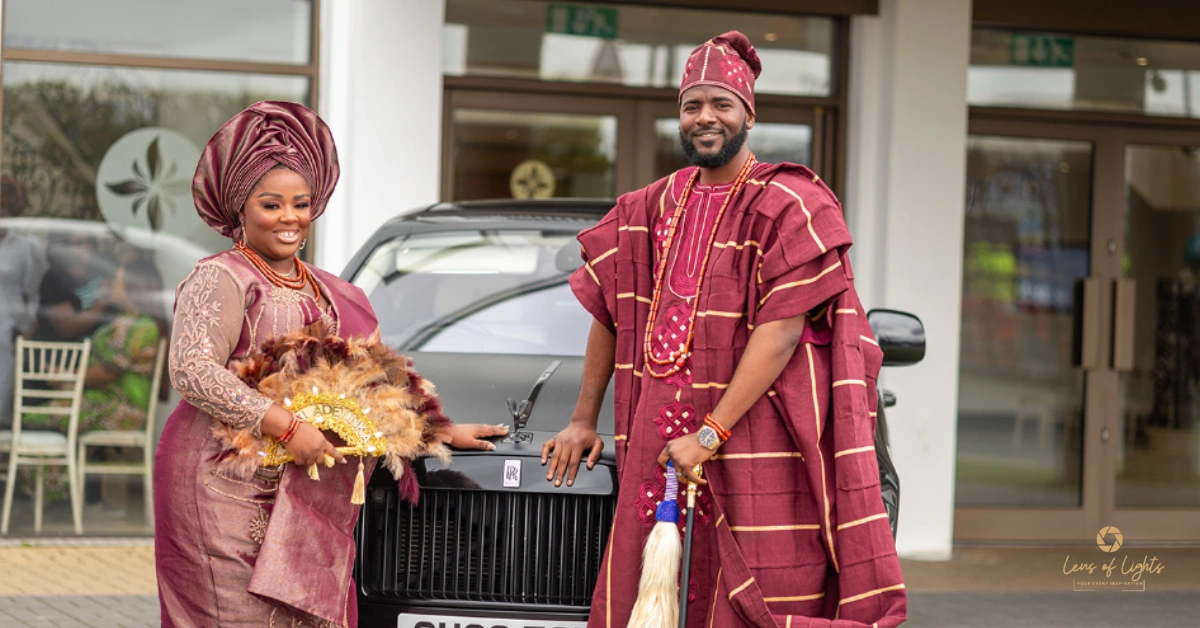
The highlight of the Igbo Igba Nkwu ceremony is the wine-carrying ritual. The bride searches through the crowd to find her groom. She offers him a cup of palm wine as a symbol of her choice. That moment – her expression when she spots him, his reaction, the crowd pressing in – is one of the most emotional frames of any wedding day.
What photographers must recognise immediately:
- Red cap and Isiagu fabric on the groom – the lion head pattern is a direct symbol of Igbo identity
- Coral beads on the bride and senior female family members – these carry deep royal meaning and deserve careful, well-lit close-up shots
Hausa Weddings
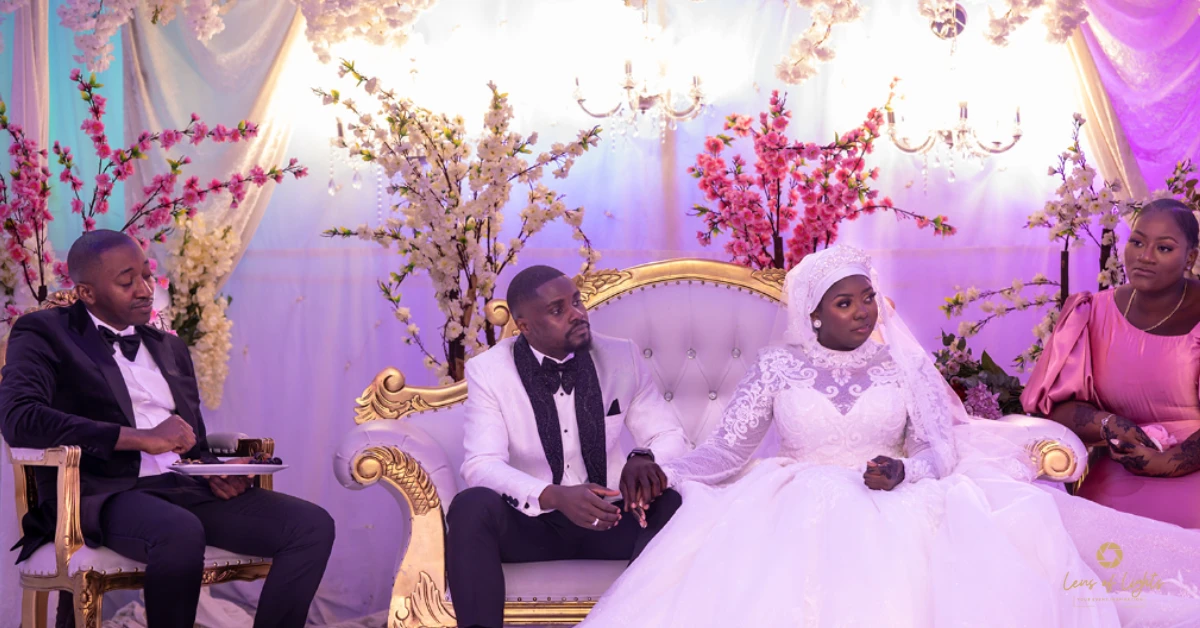
Hausa weddings follow Islamic tradition. The structure works like this:
- Fatihah – the core ceremony where vows are exchanged
- Kunshi – a bridal preparation celebration, similar to a bridal shower
- Walimah – the grand reception with music, food, and communal dancing
Hausa wedding photography needs a different eye. The tones are softer. Modesty is intentional. Family moments become the main story. Henna art on the bride’s hands is a photographic subject in its own right. The elegance here is quieter – but just as powerful.
Aso Ebi: The Colour Code That Defines the Room
If there is one visual element that defines a Nigerian wedding photo, it is aso ebi. Understanding it changes how you see the entire room.
What is aso ebi?
Aso ebi means “family cloth” in Yoruba. It is a shared fabric worn by a group to show they belong to the couple’s side. It started with the Yoruba but has spread to Igbo, Hausa, and most of West Africa.
Here is how it works at a typical Nigerian wedding:
- The bride’s family picks one fabric – a specific colour and pattern of lace, ankara, or aso-oke
- The groom’s family picks a different fabric
- Close friends may get their own aso ebi assignment
- Everyone wearing the fabric sends one clear message: I am here for this family
The result? A hall filled with two large blocks of coordinated colour facing each other. It is one of the most striking visuals in any wedding photography anywhere in the world.
In London, aso ebi has become a way for Nigerian families to show their cultural identity far from home. Many couples now hire stylists to put together cohesive aso ebi looks. The best-dressed groups regularly go viral on Instagram.
What this means for photographers:
- Two large colour blocks dominate every wide shot
- Rich lace, ankara, and aso-oke fabrics need manual white balance and adjusted exposure
- If you have never seen these fabrics before a Nigerian wedding, you will struggle to expose them correctly on the day
The Unmissable Shots: A Nigerian Wedding Photography Shot List for London
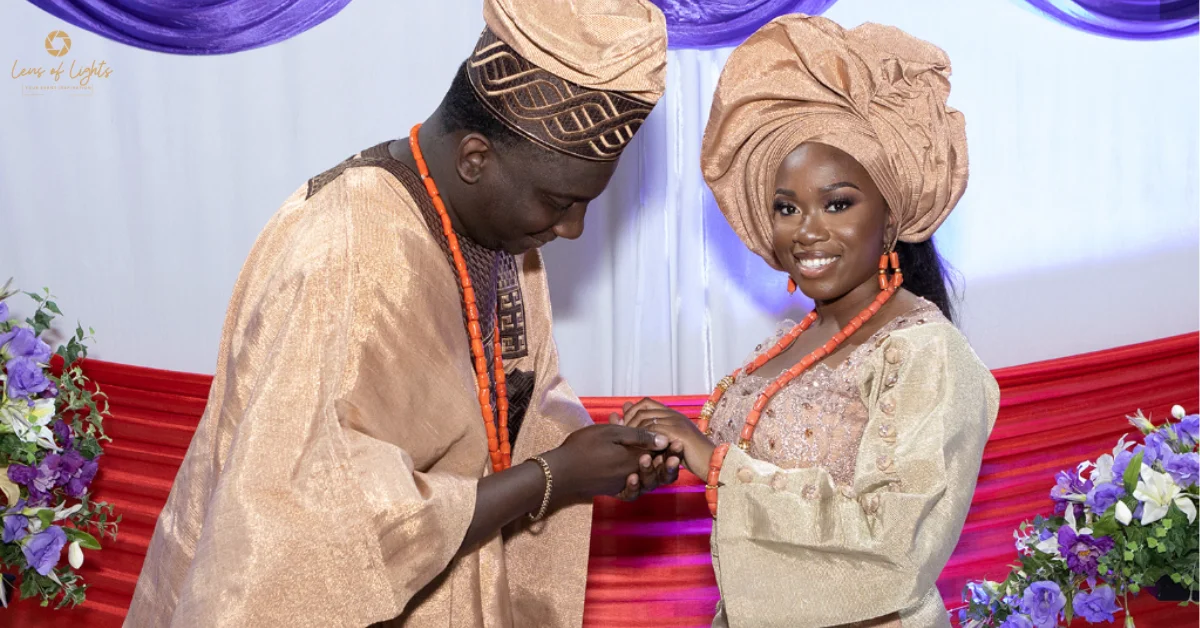
Every wedding has key moments. Nigerian weddings have more of them, packed into less time, with a larger crowd between you and the action. Here is a practical shot list built from real experience covering London Nigerian weddings.
Before the Ceremony
- The gele being tied – the tier’s hands moving across stiff fabric, the bride watching in the mirror
- Coral beads are being fastened, and aso-oke accessories are being adjusted
- The groom is dressed in his agbada – a full-length moment with groomsmen around him
- Quiet moments between the bride and her mother before the day begins
During the Traditional Ceremony
- The prostration – the groom and his groomsmen lying flat before the bride’s family, at the exact moment the master of ceremonies gives the signal
- The Alaga working the crowd – shoot wide for context first, then move in tight for the energy on people’s faces
- The kola nut ceremony – the nut is cracked and shared between the couple and their parents as a symbol of willingness to work through any future difficulties
- The wine-carrying moment (Igbo) – her face, his face, and the crowd leaning in all at once
At the Reception
- The couple’s entrance – a wide shot first to capture both aso ebi colour blocks, then fast movement to a tight shot of the couple’s faces
- The money-spraying – guests showering the couple with banknotes while they dance. Shoot wide for scale, then go tight for the joy on people’s faces
- The dancefloor at full capacity – this moment captures the spirit of the Nigerian community better than any other
- Each outfit change – treat every new outfit as a mini editorial shoot, not just a practical detail
- Three-generation family portraits – grandparents, parents, siblings, and children all together in one frame
Nigerian Wedding Venues in London: Knowing the Room Before You Arrive
Knowing the venue before the day is a real advantage. London Nigerian weddings happen across a wide range of spaces – from large council-owned banqueting halls in Newham and Hackney to prestige estates in Hertfordshire and Surrey.
Nigerian weddings are large community events. A guest list of 200 is considered small. Lists of 400 to 600 are very common for established families.
Nigerian Wedding Venues in London: Knowing the Room Before You Arrive
|
Venue
|
Location
|
Key Photography Challenge
|
|---|---|---|
|
Enfield
|
Amber-heavy uplighting - set white balance manually
|
|
|
Bayswater
|
Beautiful natural light through tall windows in the afternoon
|
|
|
Limehouse
|
Art deco but dark - a second shooter is essential here
|
|
|
Isleworth
|
Outdoor grounds offer golden-hour couple portrait windows
|
Tips for venue preparation:
- Walk the venue before the day, if possible
- If not, ask the couple for a floor plan and photos from previous events held there
- Identify your second-shooter positions before guests arrive
- Find the natural light spots – you will need them for the portrait
How to Find the Right Nigerian Wedding Photographer in London
This is the question most couples spend the most time on – and it is worth taking seriously. A photographer who understands Nigerian traditions can tell the real story of the day. One who does not will miss the most important moments.
Questions to Ask Before You Book
- How many full Nigerian weddings have you covered? Not just “African” or “multicultural” – specifically Nigerian, with both a traditional ceremony and an Owambe reception.
- Can I see complete galleries? Edited highlights show a photographer’s best 30 images. Full galleries show what the rest looks like. Always ask for the full set.
- How do you handle dark ballroom lighting? A good answer mentions fast prime lenses (f/1.4 to f/2.8), off-camera flash setups, and high-ISO camera bodies.
- Do you have a second shooter? For a Nigerian wedding, one photographer will miss moments. The traditional ceremony and bridal preparations often run at the same time in separate locations.
- How do you edit darker skin tones? This matters. Editing presets built for lighter skin tones often wash out or oversaturate darker skin. Ask to see unedited samples next to the final edits.
Red Flags to Watch For
- They do not know what aso ebi is
- Their portfolio only shows posed couple shots with no cultural ceremony coverage
- They quote a flat half-day rate without asking how many ceremonies are involved
- They have never shot in a banqueting hall at night
- They cannot explain how they would light the prostration moment
Nigerian Wedding Photography Trends in London (2026)
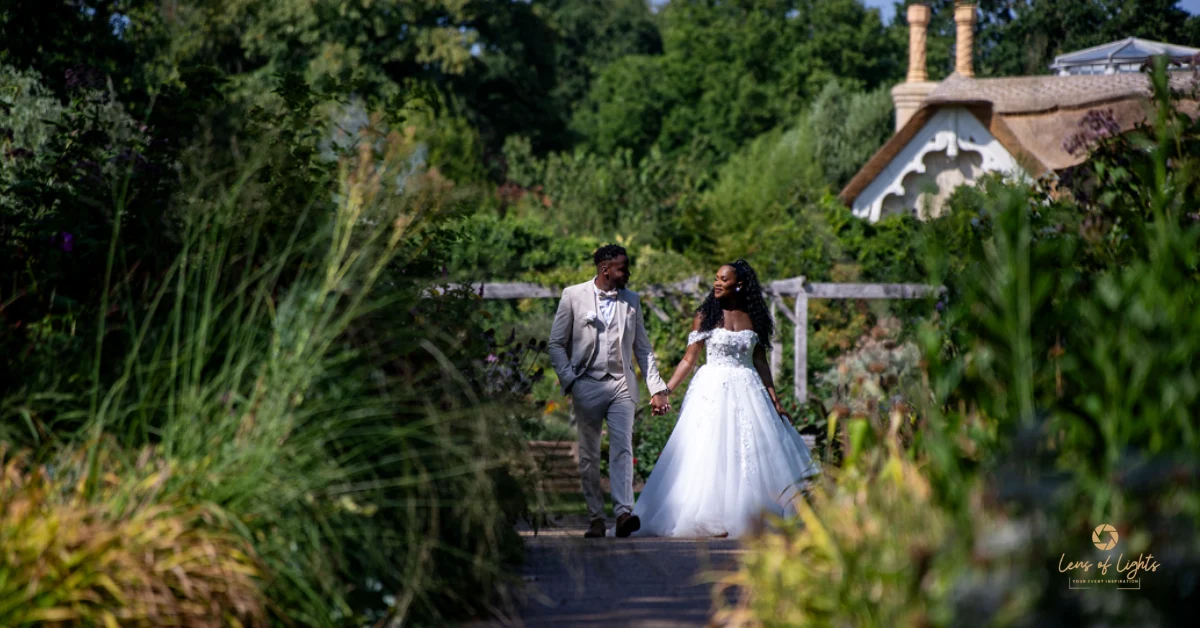
The Nigerian wedding photography scene in London is moving fast. A new generation of couples has grown up seeing world-class wedding imagery online, and their expectations have risen to match.
Top trends shaping Nigerian wedding photography in London right now:
- Bold colour editing – Dramatic, vivid colour palettes in bridal attire, décor, and final edits are leading the way in 2026. Nigerian weddings are the perfect setting for this style because the raw material is already there.
- Editorial-style portraits – High-fashion magazine aesthetics are hugely popular. Couples want strong poses, dramatic lighting, and wedding photos that double as campaign-quality imagery.
- Combined photo and video packages – Most London Nigerian couples now book photography and videography together. The cinematic wedding film has become just as important as the still photos, especially for sharing with family back in Nigeria. Explore the latest wedding videography trends UK couples are choosing in 2026 to understand what to ask for.
- Skin tone accuracy – There is a growing and completely justified expectation that photographers can capture and edit darker skin tones correctly. This is a technical skill, not a bonus feature.
- Drone footage – Aerial shots of venue exteriors, garden receptions, and couple arrivals are increasingly requested for wedding films.
- 48-hour social media delivery – The viral potential of aso ebi groups on Instagram means many couples now brief their photographer with a specific social media shot list and expect a highlight gallery delivered within 48 hours.
Want to stay ahead of what is working in wedding photography right now? Read UK Wedding Photography Trends for 2026: Styles Couples Are Loving for a deeper look.
Practical Tips for Couples Planning Their Photography
Planning your photography well in advance makes a real difference on the day itself. Here is what experienced Nigerian wedding couples in London recommend:
Before the day:
- Book at least 12 to 18 months early. The best London
- Nigerian wedding photographers fill up fast, especially from
- May through October. September and October book out first.
- Share a detailed runsheet. Write down every ceremony, outfit change, and key ritual, with the expected timing for each. Your photographer cannot be in the right place at the right time without it.
- Prepare your family portrait list. At a 400-person wedding, an unplanned family portrait session can eat up 90 minutes. Write the combinations in advance: Couple + bride’s parents, Couple + groom’s parents, Couple + both sets of grandparents, etc. Assign a family member to round people up.
- Share your aso ebi palette. Send the specific colours and fabrics at least two weeks before the day, so your photographer can plan lighting setups and editing approach.
On the day:
- Assign one person from each family as a point of contact for your photographer
- Tell your photographer which rituals mean the most to you so they can prioritise positioning
- Give the Alaga a heads-up that your photographer needs early warning before each ceremony moment begins
After the day:
- Discuss delivery expectations at the booking stage, not afterwards
- If you want Instagram images the same night, say so upfront – some photographers offer same-day edits of 20 to 30 images
- Most full galleries are delivered two to six weeks after the wedding
For more advice on capturing natural moments throughout your day, see How to Look Natural in Wedding Photos: Expert Tips from a UK Wedding Photographer.
Why Lens of Lights Is the Best Choice for Your Nigerian Wedding Photography in London
At Lens of Lights, the team does not just show up with a camera and hope for the best. They come to your Nigerian wedding already knowing what matters – and that preparation makes the difference between good photos and photos you will show your grandchildren.
Here is what sets Lens of Lights apart:
- Full-day, multi-ceremony coverage – from bridal preparations in the morning right through to the Owambe dancefloor at midnight, every moment is covered
- Second photographer included – so both the bride’s and groom’s preparations are captured at the same time, with no moments missed
- Cultural understanding – the team knows the prostration, the gele-tying, the wine-carrying, the money-spraying, and the Alaga’s cues. They do not need a tutorial on the day.
- Skin tone expertise – photos are edited to represent every skin tone beautifully, with no washed-out shadows or ashy midtones
- Drone footage – aerial shots of your venue and arrival are available as part of the combined packages
- Cinematic wedding films – combined photo and video packages that tell the full story of your day
- Flexible payment plans – so quality photography does not have to mean financial pressure
- Fast turnaround options – including same-day social media highlights for immediate sharing with family in Nigeria and around the world
- Fully insured and professional – every booking is backed by full professional insurance and a clear contract
The reviews speak for themselves. Couples consistently describe the Lens of Lights team as professional, warm, and genuinely invested in getting every detail right – from the first planning call to the final gallery delivery.
Ready to secure your date? Nigerian weddings in London book out fast – especially from May through October. View Wedding Photography & Videography Packages or Contact the Lens of Lights Team today to check availability and get a personalised quote for your day.
Final Thought
A Nigerian wedding in London is not one event – it is a series of deeply layered ceremonies, each carrying centuries of cultural meaning, wrapped inside one of the most joyful, colourful, community-driven celebrations in the world.
The right photographer arrives knowing that the gele-tying is worth 20 minutes of their time. They know to position themselves before the prostration starts. They can read the Alaga’s pacing and know when the crowd is about to erupt. And when the lights drop at the Owambe, and the dancefloor fills wall to wall, they have already got the wide shot and are moving in for the faces.
That level of preparation only comes from experience. And choosing a photographer who has that experience is the most important decision you will make in planning your London Nigerian wedding photography.
Frequently Asked Questions
Do I need a second photographer at a Nigerian wedding?
Yes. With multiple events happening at once (like bridal and groom prep), a second photographer is essential—not optional.
What is aso ebi, and why does it matter for photography?
Aso ebi is a coordinated fabric worn by guests, creating a vibrant, unified look. It requires skilled handling of colour, lighting, and white balance.
What is the Owambe reception?
The Owambe is the main celebration—full of music, dancing, food, and traditions like money spraying. It’s the most energetic part of the wedding.
Should I book a Nigerian specialist or a general wedding photographer?
Go with a specialist. Nigerian weddings have unique traditions that require cultural understanding to capture properly.
How long does coverage typically need to last?
Usually, 10–14 hours for a one-day event. Multi-day weddings may require full-day coverage across two days.
Related Articles:
Wedding photography contract: 10 things every UK couple must check
Quick Overview A wedding photography contract is a legally binding...
Read More
Rainy Wedding Day Photography in the UK: The Couple’s Guide to Getting Amazing Shots
Rain on your UK wedding day does not ruin photos...
Read More
Documentary vs Posed Wedding Photography in UK: Which Style is Right for You?
Documentary wedding photography captures your day as it naturally unfolds...
Read More