
Quick Overview: Kew Gardens is the best overall pick for...
Read More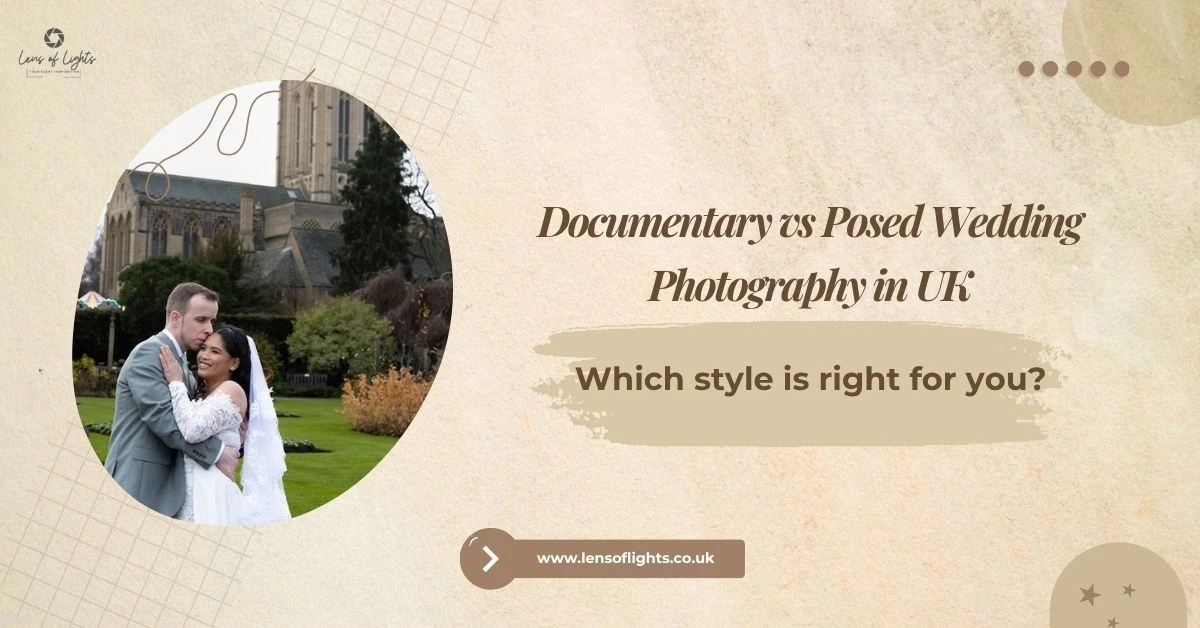
Share On Social Media
Documentary vs Posed Wedding Photography in UK: Which Style is Right for You?
Documentary wedding photography captures your day as it naturally unfolds – no posing, no staging, just real emotions as they happen. Posed (traditional) photography involves directed portraits and structured group shots, delivering polished, timeless images.
Most UK couples in 2026 choose a blended approach: documentary coverage throughout the day, with a short creative portrait session. The right choice depends on your personality, venue type, and whether you want to remember how the day looked – or how it felt.
This guide breaks it all down clearly. By the end, you’ll know exactly which style suits your personality, your venue, and the way you want to remember your day.
What Is Documentary Wedding Photography?
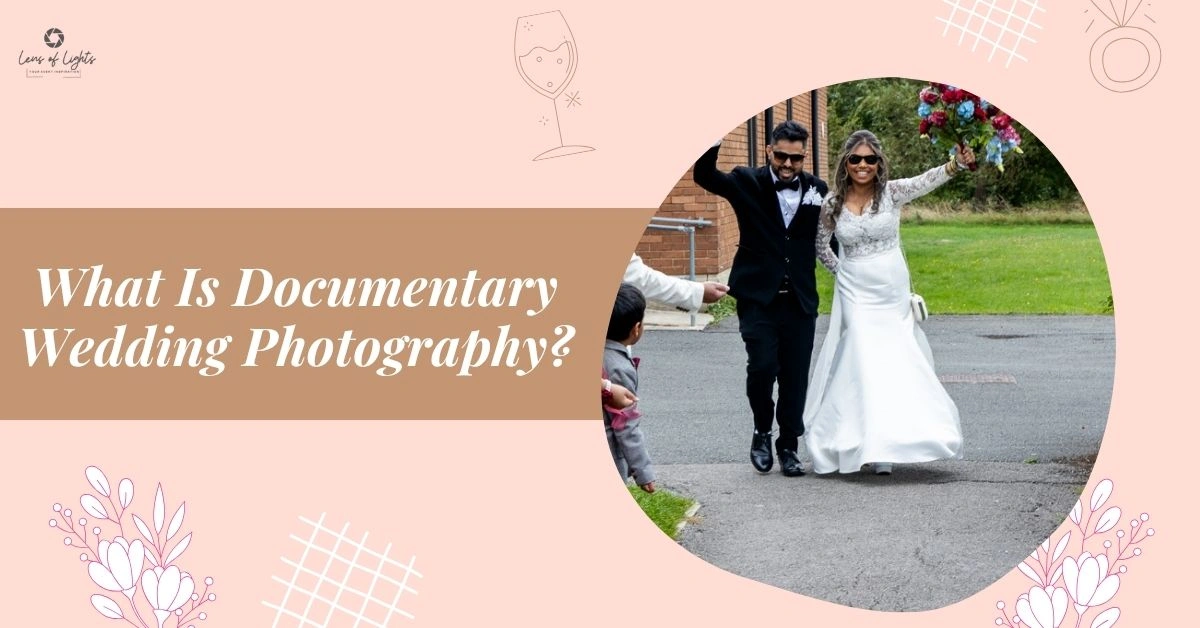
Documentary wedding photography – also called reportage, photojournalism, or candid wedding photography – means your photographer stays out of the way and lets your day happen. No direction, no posing, no “okay, everyone smile.” They watch, they wait, and they shoot the moments that actually matter.
The goal is simple: capture how the day felt, not just how it looked. That means the tears before the ceremony, the snort-laugh during the speeches, the quiet moment between you and your mum before you walk in. None of it was staged. All of it is real.
- Documentary photography works especially well at relaxed UK weddings – barn and tipi celebrations, festival-style events, woodland ceremonies in Scotland, and heritage venues where the atmosphere does the heavy lifting.
- Changing British weather – overcast skies, sudden bursts of golden light – actually suits a skilled documentary photographer, who is trained to work with available light rather than against it.
- Even the most candid-focused photographer will usually carve out around 20 minutes for family group shots, typically at the start of drinks, before returning to unposed coverage for the rest of the day.
Common terms used for the same style: reportage, photojournalism, candid wedding photography, and unposed wedding photography.
What Is Posed (Traditional) Wedding Photography?
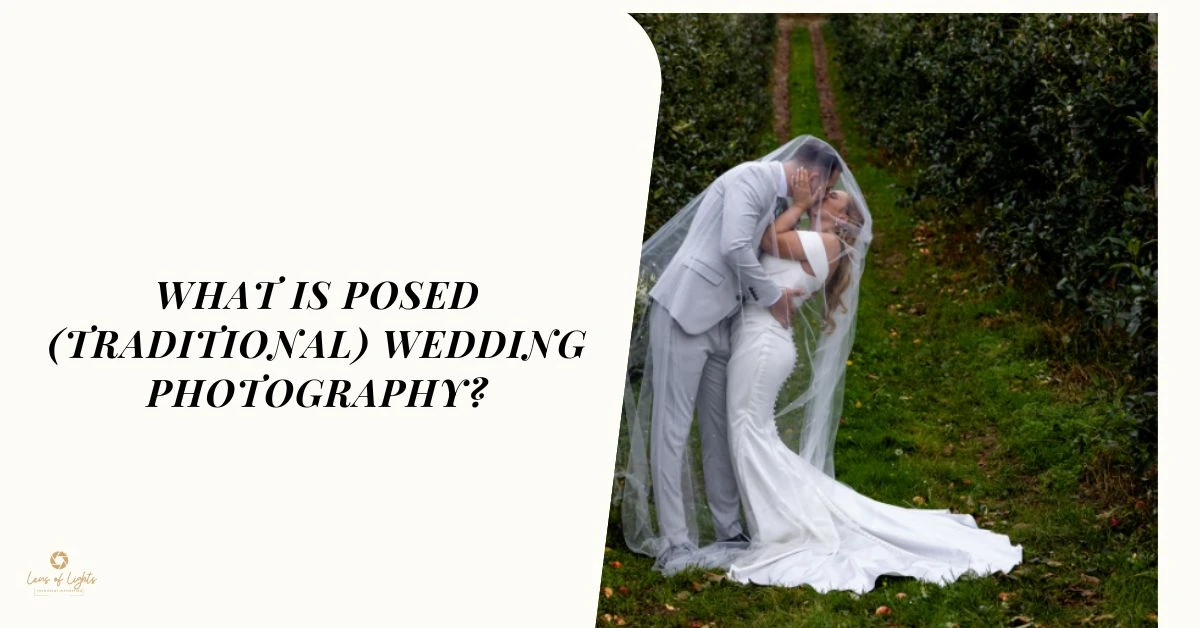
Posed – or traditional – wedding photography means your photographer takes the lead. They arrive with a shot list and a plan, and they guide you, your wedding party, and your family into structured, composed images that are consistent and built to last.
This is the style behind the classic wedding shots: the couple framed by a stone archway, the bridal party lined up on a grand staircase, the three-generation family portrait that ends up on the living room wall for decades. Done well, it doesn’t look stiff – an experienced traditional photographer knows how to prompt natural expressions, ease nerves, and make even the most camera-shy uncle look like he’s having the time of his life.
- Posed photography needs scheduled time in your day – usually 20 to 40 minutes for family formals and another 20 to 30 minutes for couple portraits, according to standard industry practice among UK wedding photographers.
- The main trade-off is time away from your guests, typically during cocktail hour, which is worth thinking about before you commit to a heavily posed approach.
- It performs best at formal UK venues: stately homes, manor houses, grand church ceremonies, and black-tie hotel receptions where the setting itself is part of the story.
This style works beautifully in countryside estates, rustic barns, and church ceremonies. It’s particularly popular for outdoor weddings in locations like the Lake District and the Cotswolds, where atmosphere plays a key role in the visual narrative.
The Key Differences at a Glance
|
Aspect
|
Documentary
|
Posed
|
|---|---|---|
|
Photographer's role
|
Silent observer
|
Active director
|
|
Your experience
|
Forget the camera exists
|
Aware of being photographed
|
|
Day flow
|
Uninterrupted
|
Scheduled portrait blocks
|
|
Emotional tone
|
Raw, genuine, spontaneous
|
Polished, composed, timeless
|
Neither column is superior. They serve different needs – and different couples.
The Rise of the Blended Approach in UK Weddings
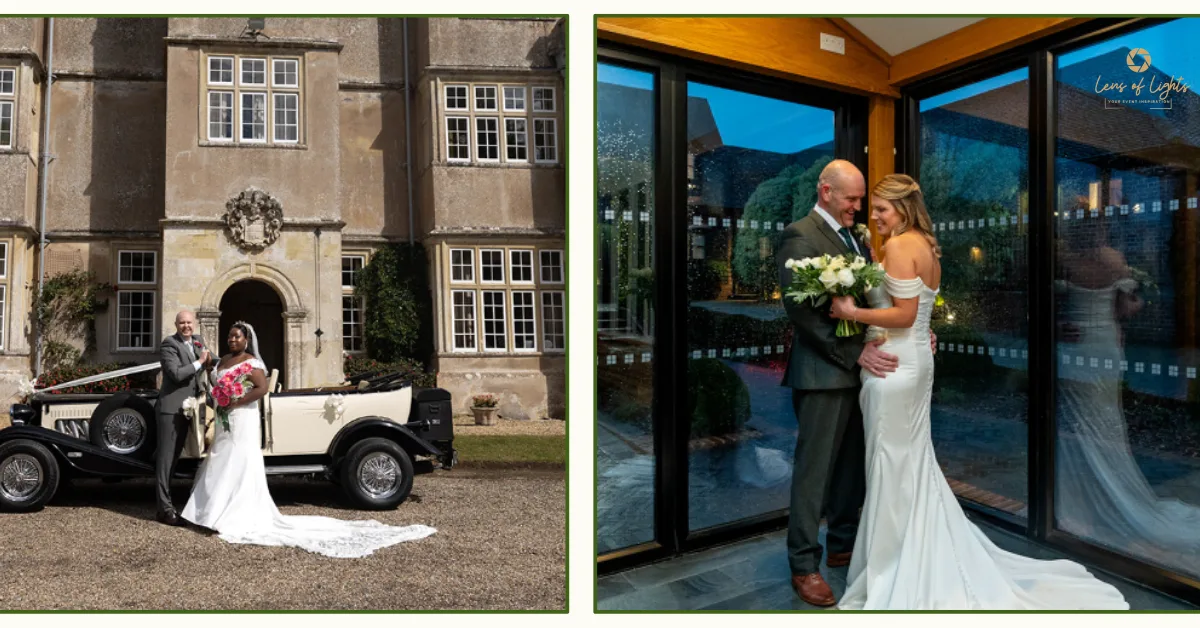
The blended – or hybrid – approach combines documentary and posed techniques within one package. It has become the go-to choice for UK couples, and it is easy to see why.
According to the Bridebook UK Wedding Report 2026, based on data from over 7,000 couples, natural and candid imagery remains by far the most popular photography style. The blended approach is the industry’s answer to that demand.
Here is how it works in practice: documentary coverage runs throughout the entire day. Then, at a natural pause – usually late afternoon, during golden hour, or while guests are seated for their meal – the photographer sets aside 20 to 30 minutes for a relaxed couple portrait session. These portraits are gently prompted rather than rigidly staged, so the images feel real even though they are carefully composed.
- The result is a complete gallery – candid storytelling from the full day, plus a set of high-quality portraits worth printing large and framing.
- It removes the pressure of the either/or choice entirely – you get spontaneity and beauty without sacrificing one for the other.
- One thing worth knowing: the term “documentary style” is used loosely across the industry. Some photographers who market themselves as documentary photographers regularly stage and direct moments, which technically makes their work posed photography with a candid aesthetic. Always ask to see a full wedding gallery, not just a curated highlight reel, to check whether a photographer’s actual work matches their claimed style.
Which Style Suits Your Personality?
This is where the decision becomes personal. Use the framework below honestly – it’s more useful than any quiz.
You’ll likely prefer a documentary-led approach if:
- You feel awkward in front of a camera and don’t love being directed
- You want to be fully present and immersed in every moment of your day
- Your wedding has a relaxed, informal, or festival atmosphere
- You value remembering how the day felt over how it looked
- You love images that are raw, emotional, and imperfectly perfect
- You don’t want to spend large portions of the day away from your guests
You’ll likely prefer more posed coverage if:
- You want guaranteed, beautifully composed portraits of every family combination
- Your venue has dramatic architecture or breathtaking backdrops you want to showcase
- You or your partner is comfortable being directed and wants to look absolutely your best
- You have specific must-have shots – particularly important if you have elderly relatives or guests who may struggle with candid coverage
- You want a gallery that feels consistently polished and magazine-worthy throughout
The blended approach is probably right if:
- You want real moments and beautiful portraits – because why choose?
- You feel some anxiety about posing, but still want a handful of structured shots
- You’re working with a venue that has both stunning architecture and a relaxed atmosphere
- You trust your photographer to read the room and guide you gently without making your day feel like a photoshoot
How Your UK Venue Affects the Best Style Choice
This is the nuance almost no comparison article covers – and it’s one of the most practically useful things to consider.
- Country houses and stately homes suit both styles well. The formal architecture rewards posed portraiture, while the often sprawling grounds and multi-room layouts give a documentary photographer rich territory to explore.
- Barn and tipi weddings lend themselves naturally to documentary photography. The relaxed, informal atmosphere means guests are themselves from the start, and the warm ambient light inside a well-lit barn is a documentary photographer’s dream.
- Church ceremonies are where documentary photography earns its keep most visibly. The procession, the vows, the ring exchange, the moment you turn to face your guests as a married couple – these are unrepeatable, and a skilled documentary photographer will catch every one without a second attempt.
- Scottish castles and Highland venues present dramatic light challenges – often overcast, often rapidly changing – that reward photographers trained to adapt quickly. Documentary-focused photographers tend to handle this more confidently than those who rely on controlled lighting setups.
- City and industrial venues increasingly attract couples who want editorial-style blended photography: documentary candids with intentional, graphically strong portraits using the architecture as a backdrop.
A simple rule: ask any photographer you’re considering how many weddings they’ve shot at venues similar to yours – or at your specific venue, if possible. Experience with your setting translates directly into better images.
Ready to Find Your Perfect Style? Talk to Lens of Lights
At Lens of Lights, we photograph UK weddings with a genuine blended approach – documentary storytelling at the heart of everything, with beautifully crafted portraits that feel natural rather than forced. We’ve captured weddings from intimate village hall celebrations to grand English estate ceremonies, and we bring the same care and attention to every single one.
Whether you’re drawn to candid moments, creative portraits, or a mix of both, we’d love to be part of your day.
👉 Explore our wedding photography & videography packages →
👉 View our portfolio of real UK weddings →
👉 Get in touch to check your date →
Conclusion: It’s Not Really Either/Or
The most important thing to take away from this guide is that the question isn’t really “documentary or posed?” It’s “which photographer understands my vision and has the skills to bring it to life?”
If you value authentic, emotional storytelling above everything else, lean towards a documentary-led photographer. If polished portraiture and guaranteed coverage of every family combination matter most, look for someone with strong traditional skills. And if, like most couples, you want both, find a photographer who blends them naturally and doesn’t make your day feel like a photoshoot.
Review full galleries, ask the right questions, check for industry recognition, and trust your gut about personality fit. The right photographer will feel like someone you’d want at your wedding, even if they didn’t have a camera.
Frequently Asked Questions
Is documentary wedding photography the same as reportage?
Yes. In the UK, both terms mean a natural, storytelling style with no posing. It’s also sometimes called photojournalistic photography.
Can I have both documentary and posed photos at my wedding?
Yes. Most couples choose a mix of candid coverage plus a short, relaxed portrait session.
How long do posed photos take on the wedding day?
Family photos usually take 20–40 minutes, with couple portraits around 20–30 minutes.
Will a documentary photographer still take family group shots?
Yes. They typically set aside a short time for formals, then return to candid coverage.
Which style works better in unpredictable British weather?
Documentary is more flexible, but experienced photographers handle all conditions well.
Does documentary wedding photography cost more?
Not always. Prices vary, but top photographers may charge more for their experience.
Related Articles:
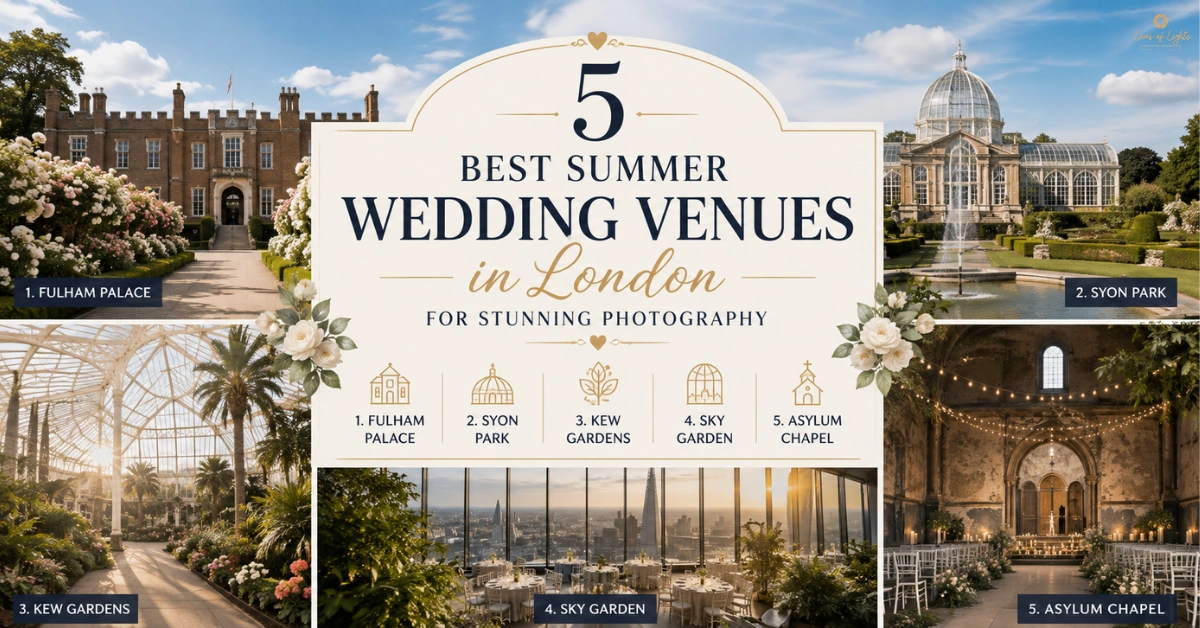
5 Best Summer Wedding Venues in London for Stunning Photography
Quick Overview: Kew Gardens is the best overall pick for...
Read More
How far in advance should you book a wedding photographer in London? (2026 Guide)
Quick Overview: Kew Gardens is the best overall pick for...
Read More
What Time Should Your UK Summer Wedding Ceremony Start for Perfect Photos?
Quick Overview: A wedding videographer in London typically costs £1,800-£4,500,...
Read More